Spiral Blossums Patterns: A Versatile Vector Asset for Designers
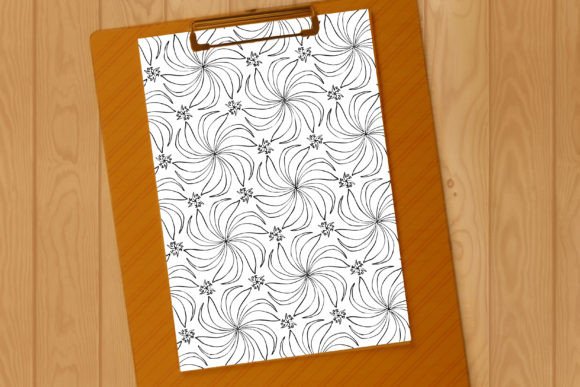
In the realm of graphic design and digital illustration, the search for unique yet versatile assets is constant. One such asset gaining attention among creators is Spiral Blossums Patterns. This specific pattern offers a distinct aesthetic that blends organic forms with geometric precision. It is defined as a hand-drawn, abstract, black and white repeat pattern featuring spiral-shaped blossoms offset by mini trifoil spiral foliage. For professionals looking to integrate nature-inspired motifs without the complexity of raster images, this SVG-based collection presents a compelling option.
Understanding the Composition of Spiral Blossums Patterns
To evaluate whether this pattern fits your workflow, it is essential to understand its technical and artistic structure. The core visual element consists of closed outlines rather than filled shapes. Each blossom is rendered as a single set of curves, ensuring that the lines remain smooth and scalable regardless of the output size. These primary spiral blossoms are strategically offset by smaller, three-lobed elements described as mini trifoil spiral foliage. This combination creates a rhythmic balance between the larger floral forms and the intricate background details.
The defining characteristic of this asset is its format. It is saved in Scalable Vector Graphics (SVG) format. Unlike JPEG or PNG files, which rely on pixels, an SVG file relies on mathematical equations to define shapes. In this specific case, every shape is unified on one neat layer. This architectural decision significantly impacts how the file behaves within design software. It allows the user to treat the entire pattern as a cohesive unit while retaining the ability to manipulate individual components if necessary.
Technical Attributes and Flexibility
- Format: SVG (Scalable Vector Graphics).
- Style: Hand-drawn, abstract, black and white line art.
- Structure: Closed outlines on a single layer.
- Elements: Spiral blossoms and trifoil foliage.
- Scalability: Infinite resolution without pixelation.
Why Designers Choose Vector-Based Floral Patterns
The decision to utilize Spiral Blossums Patterns often stems from the practical advantages offered by vector technology over raster alternatives. When working on large-scale projects such as website backgrounds, packaging designs, or textile prints, maintaining image quality is paramount. Raster images can become blurry or blocky when stretched, whereas the SVG format ensures that the crispness of the hand-drawn lines remains intact at any dimension.
Furthermore, the monochromatic nature of the pattern provides a high degree of adaptability. Because the design exists as clean outlines, it does not impose a specific color palette on the project. Instead, it serves as a structural framework that can be recolored to match brand guidelines, seasonal themes, or specific client requests. This flexibility reduces the need for multiple versions of the same asset, streamlining the production process.
Evaluating Benefits and Tradeoffs
When considering the integration of this pattern into a project, it is important to weigh the benefits against potential limitations. The primary advantage lies in the ease of transformation. Since the file is formatted as a single set of curves, designers can apply global adjustments, such as changing stroke weights, filling the shapes with gradients, or altering the opacity, without degrading the image quality. This allows for the creation of complex textures from a simple line drawing.
However, there are tradeoffs to consider regarding the "hand-drawn" aspect. While the aesthetic appeal of imperfect, organic lines is significant, it may not suit projects requiring strict geometric uniformity. Additionally, because the pattern is presented as a single layer, users who require absolute isolation of every single flower for complex masking techniques might find they need to ungroup or trace the paths before editing. While this is a standard procedure in vector software, it adds a minor step to the workflow compared to pre-segmented assets.
Key Considerations for Implementation
- Software Compatibility: Ensure your design tool supports advanced SVG features like path manipulation.
- Stroke Weight: Determine if the current line thickness suits your final medium; thin lines may disappear in print.
- Color Application: Plan how you will apply color, as the base file is strictly black and white.
- Repetition Logic: Verify that the repeat pattern aligns seamlessly if used as a tileable background.
Ideal Use Cases for Spiral Blossums Patterns
This pattern excels in scenarios where elegance and subtlety are required. Its abstract nature makes it particularly suitable for editorial design, where text needs to sit atop a background without creating visual clutter. The open spaces within the spiral outlines allow typography to breathe, making it an excellent choice for magazine layouts, book covers, and invitations.
In the realm of branding, the pattern offers a strong fit for companies aiming to convey a sense of growth, creativity, or organic sustainability. By recoloring the lines to match a corporate identity, businesses can create unique patterns for their packaging, business cards, or social media graphics. The seamless repeat capability also makes it viable for surface design applications, such as fabric printing, wallpaper, and wrapping paper, where the pattern must extend across large surfaces without visible breaks.
When Alternatives May Be Preferable
While Spiral Blossums Patterns is highly versatile, it is not a universal solution. If a project requires a fully filled, solid-color floral motif without the need for outlining, a raster illustration or a pre-colored vector clipart might be more efficient. Similarly, if the design goal is to create a high-contrast, bold graphic where the fine details of the hand-drawn lines might get lost, a thicker, bolder style would be more appropriate.
Additionally, users working in environments with limited vector capabilities, such as certain basic web editors or older presentation software, might face challenges manipulating complex SVG layers. In these cases, a simplified PNG version or a CSS-generated pattern might offer better compatibility, even if it sacrifices some editability.
Making the Decision: Does It Align With Your Goals?
Selecting the right asset depends on a clear understanding of your project's technical requirements and aesthetic goals. If your priority is scalability, customizability, and a refined, hand-crafted look, Spiral Blossums Patterns represents a strong candidate. The ability to reimagine the look and feel through color and stroke manipulation means the asset can evolve alongside your design concept.
Conversely, if your project demands immediate visual impact with minimal post-processing, or if the specific organic flow of the spirals conflicts with the rigid structure of your layout, you may need to explore other options. Ultimately, the value of this pattern lies in its neutrality; it is a blank canvas that responds to the designer's intent. By leveraging its SVG foundation, you gain the freedom to transform a simple black and white outline into a dynamic element that defines the character of your work.
For those ready to experiment with abstract botanical forms, this pattern offers a robust starting point. It bridges the gap between traditional hand-drawn aesthetics and modern digital flexibility, providing a reliable tool for enhancing design projects across various mediums.